
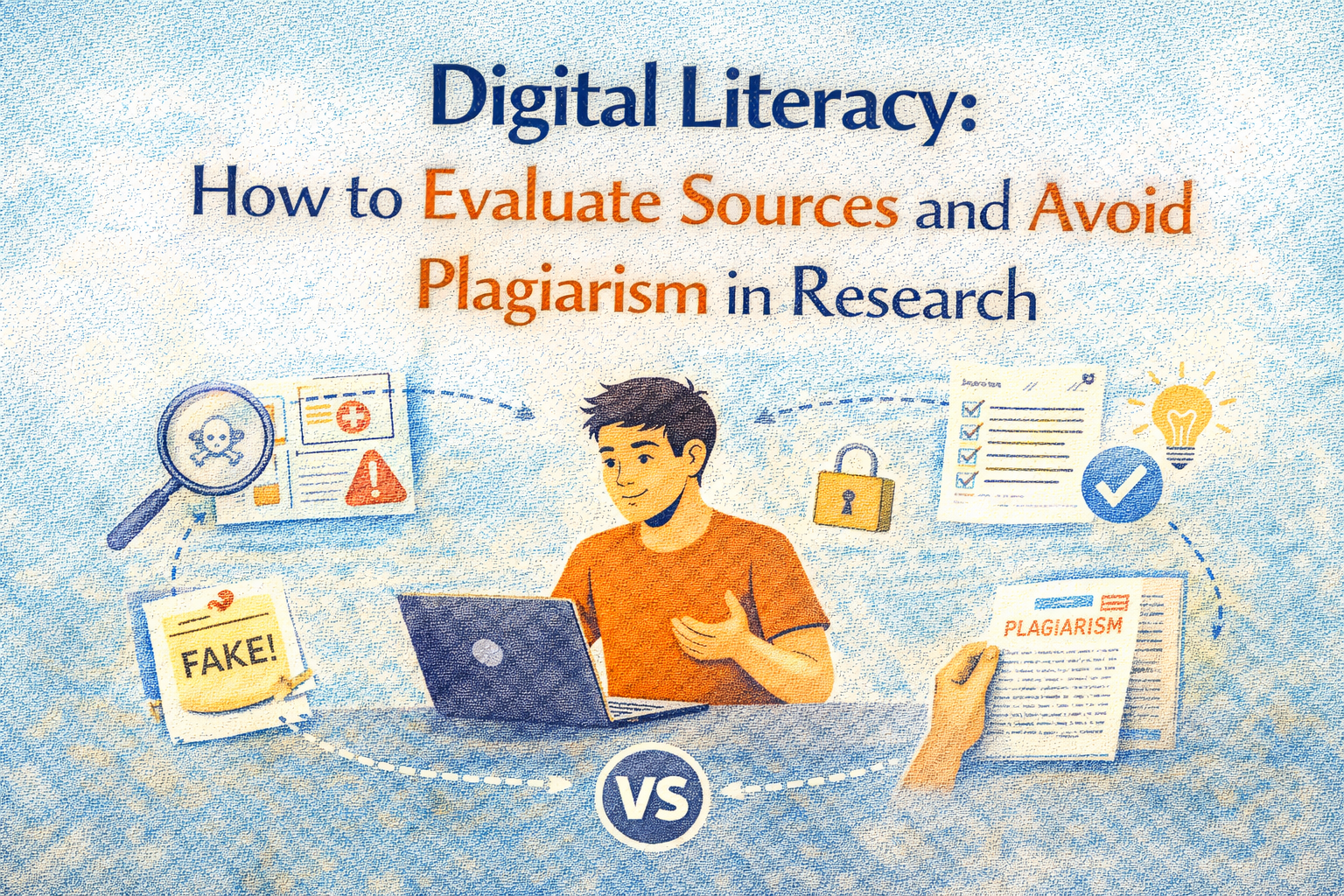
University life is a massive jump from high school. Suddenly, you aren’t just memorizing facts; you’re expected to join a global conversation. But with millions of PDF journals, blog posts, and AI-generated snippets at your fingertips, how do you know what’s actually “academic grade”? More importantly, how do you use that info without getting flagged by your professor’s dreaded plagiarism checker?
Digital literacy is the “secret sauce” of the modern student. It’s the ability to find, evaluate, and communicate information clearly. Let’s break down how to master this without losing your mind—or your GPA.
1. The “CRAP” Test: Filtering Your Sources
Before you even think about writing, you have to vet your sources. If you cite a random Reddit thread in a law essay, you’re going to have a bad time. Most universities suggest the CRAP method:
- Currency: Is the info recent? (Crucial for science/tech).
- Reliability: Is there evidence? Are there citations?
- Authority: Who wrote it? Are they a PhD or a hobbyist?
- Purpose: Is the site trying to sell you something or educate you?
2. Why “Accidental” Plagiarism is the Real Enemy
Most students don’t set out to cheat. “Blatant” plagiarism—copying a whole paper—is rare. The real danger is accidental plagiarism. This happens when you’re tired at 2 AM, copying notes into your draft, and you forget to put quotation marks around a sentence.
When you lose track of where your thoughts end and the author’s begin, you risk serious academic penalties. This is why having a solid foundation is essential. If you’re ever unsure about what constitutes a “copy,” it’s worth spending ten minutes reviewing this guide on how to avoid plagiarism. It covers the grey areas that most students trip over, like self-plagiarism or improper paraphrasing.
3. The Power of “Smart” Paraphrasing
Paraphrasing isn’t just swapping three words for synonyms. That’s called “patchwriting,” and most software will catch it. Real paraphrasing is about comprehension. You should read a paragraph, close the tab, and then explain the concept to an imaginary friend.
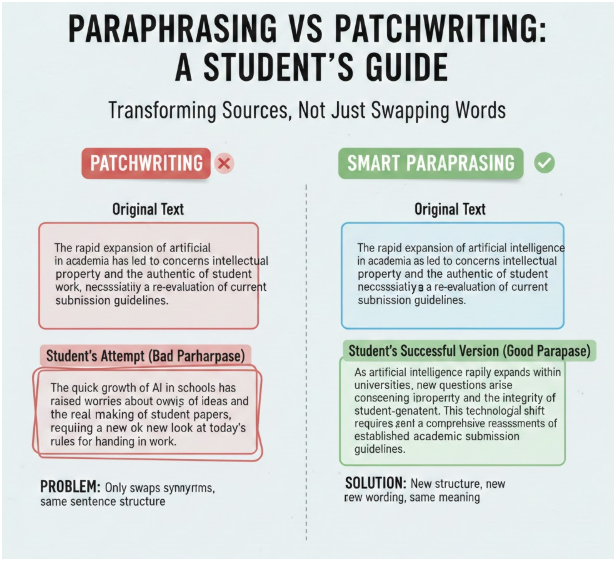
If the original text is incredibly dense—think 18th-century philosophy or complex medical jargon—it’s okay to get a little help to see the structure differently. Using a paraphrasing tool from a trusted platform, Myassignmenthelp can actually be a great learning aid here. By seeing how a tool breaks down and rearranges a complex sentence, you can learn how to build your own original version. The goal isn’t to let the tool do the work, but to use it as a “bridge” to help you find your own academic voice.
4. Organizational Hacks to Keep You Safe
Digital literacy also means managing your digital footprint. If you have twenty tabs open, you will make a mistake.
- Color-Code Your Notes: Use one color for direct quotes and another for your own thoughts.
- Use Citation Managers: Tools like Zotero or Mendeley are lifesavers.
- The “Double-Check” Rule: Never submit a paper the same hour you finish it. Your brain sees what it wants to see. Give it a rest, then look for missing citations.
5. Integrating Sources Like a Pro
Top-tier essays don’t just “drop” quotes in like heavy bricks. They “sandwich” them.
- Introduce: “According to Smith (2023)…”
- The Evidence: Insert your paraphrased point or quote.
- The Analysis: Explain why this matters to your specific argument.
This “sandwich” method proves to your marker that you aren’t just a parrot—you’re a researcher. You’re using the tools at your disposal to build a unique argument.
6. Navigating the Ethics of AI and Research
In 2026, we can’t talk about research without mentioning AI. The key is transparency. If you use a tool to help brainstorm an outline or polish a sentence, check your university’s policy. Most are fine with “assistance” but strictly against “generation.”
Being digitally literate means knowing where the line is. It’s about using technology to enhance your brainpower, not replace it. Whether you’re using a guide to verify your citations or a tool to help reword a clunky sentence, always ensure the final product reflects your understanding of the subject.
Final Thoughts
University is less about what you know and more about how you handle it. By vetting your sources, mastering the art of the paraphrase, and staying hyper-organized, you eliminate the stress of academic misconduct.
About The Author
“I’m Jacob Thompson, an academic consultant and lead researcher at MyAssignmentHelp. With over a decade of experience in higher education, I specialize in helping students navigate the complexities of digital research and academic integrity.
