

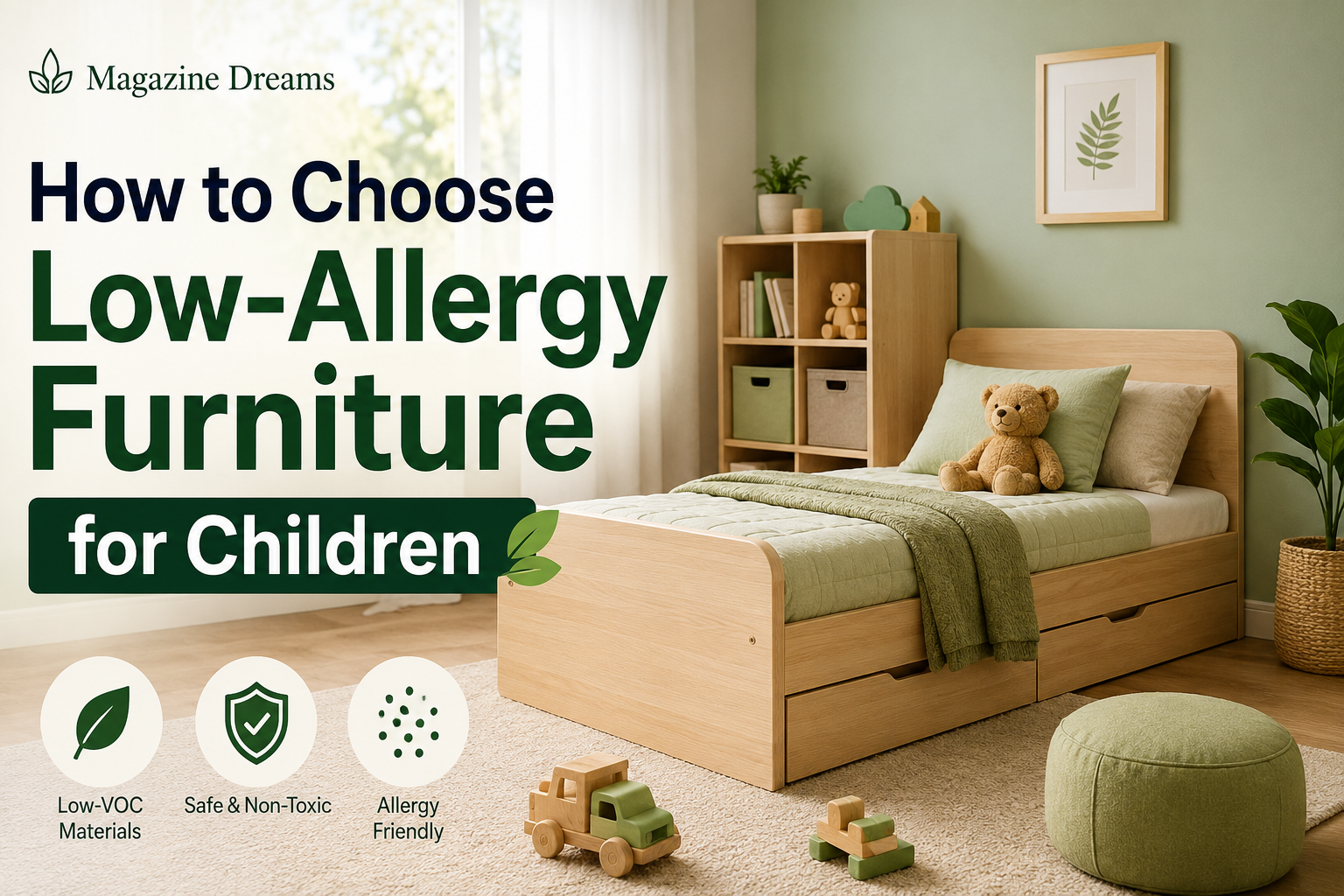
Allergy-sensitive children often react to things that adults barely notice. A dusty sofa, an old mattress, a fabric headboard, or a soft rug can hold enough dust mites, pollen, pet dander, mould spores, and chemical residues to trigger sneezing, coughing, itchy skin, or disturbed sleep. Parents usually focus on food, pets, cleaning products, and outdoor pollen, but furniture can also shape how comfortable a child feels at home.
The least allergy-prone furniture is usually simple, smooth, washable, and low in chemical odour. Solid wood, metal, glass, sealed surfaces, washable plastic, and furniture with removable covers are often easier to manage than thick upholstered pieces. The goal is not to create a bare home. The goal is to choose furniture that does not trap allergens deeply and can be cleaned without special effort.
Allergies vary from child to child, so no furniture type can be called safe for every family. A child with dust mite sensitivity may react strongly to fabric sofas and old mattresses. A child with eczema may react to rough textiles or chemical finishes. A child with asthma may struggle in a room with dust-heavy curtains, open shelving, and soft toys packed into fabric baskets. Better furniture choices reduce the number of places where allergens hide.
Why Furniture Can Trigger Allergies
Furniture affects indoor air because it holds, releases, or collects particles. Dust mites live in soft materials where they can feed on skin flakes. Their waste is a common allergy trigger. Fabric sofas, mattresses, cushions, padded chairs, beanbags, curtains, and carpets can all support dust mites if they are not cleaned often.
Pet dander also sticks to furniture. Even if a pet does not enter a child’s bedroom, dander can travel on clothing and settle into fabric seating, rugs, and bedding. A leather-look chair can be wiped down in seconds. A thick fabric armchair may hold dander in seams, folds, and padding for months.
Pollen enters homes through windows, shoes, coats, school bags, and hair. Once pollen lands on soft furniture, it can be difficult to remove fully. During spring and summer, children with hay fever may feel worse indoors if their room has open shelving, fabric storage boxes, and a padded bed frame.
Mould is another problem. Furniture placed against cold or damp walls can trap moisture. Fabric and untreated wood can develop mould if the room has poor ventilation. A wardrobe pressed against an outside wall, a fabric storage ottoman in a damp room, or a mattress on the floor can all create hidden moisture problems.
Chemical sensitivity also matters. Some children react to strong smells from new furniture, adhesives, paints, finishes, foam, or synthetic fabrics. These smells often come from volatile organic compounds, known as VOCs. Not every smell is dangerous, and not every low-odour product is perfect, but strong chemical odour is a practical warning sign for many families.
The most useful question is simple: can this furniture be cleaned easily, and does it trap dust? If the answer is no, it may not be the best choice for an allergy-sensitive child.
The Best Furniture Materials for Allergy-Sensitive Kids
Smooth hard surfaces are usually the easiest to keep clean. They do not hold dust as deeply as fabric, and parents can wipe them with a damp cloth. This makes solid wood, metal, glass, and washable plastic strong options for bedrooms, playrooms, and study areas.
Solid wood furniture is often a good choice when it has a sealed, low-odour finish. A wooden bed frame, desk, wardrobe, or bedside table can be wiped regularly and does not have thick padding where dust mites can live. Parents should still avoid rough, unfinished wood in dusty rooms because textured surfaces can hold particles.
Metal furniture is also useful. A metal bed frame or bunk bed has fewer places for dust mites to settle than an upholstered frame. Metal is also easy to clean under and around, which matters in children’s bedrooms. A simple metal frame with space underneath allows parents to vacuum properly, unlike heavy divan bases that sit close to the floor.
Glass can work well for older children’s desks or shelving, although it is not always practical for younger children. It shows dust quickly, which may feel annoying, but that visibility helps families clean before dust builds up. Safety should come first, so glass furniture should be tempered and suitable for the child’s age.
Washable plastic is practical in playrooms. Plastic chairs, toy boxes with lids, small tables, and storage drawers can be cleaned quickly after meals, crafts, or messy play. Plastic is not always the most attractive option, but it often works well for younger children because it does not absorb spills or hold dust like fabric.
Low-VOC furniture deserves attention. Many modern furniture brands offer products with low-emission finishes, water-based paints, or certified materials. Parents should look for clear product information rather than vague claims. A desk that smells strongly for weeks after delivery may not suit a child with asthma or chemical sensitivity.
Leather and leather-look surfaces can be useful for seating because they are wipeable. Real leather, faux leather, vinyl, and coated fabrics do not hold dust in the same way as thick woven upholstery. They are not perfect, as seams and cracks still collect dirt, but they are often easier to manage than deep fabric sofas.
A useful example is a child’s reading corner. A padded fabric armchair may look cosy, but it can gather dust, pollen, crumbs, and pet dander. A wooden chair with a washable cushion, or a wipeable leather-look chair, is easier to clean. If the cushion has a removable cover that can go in the washing machine, it becomes a better option.
Another example is the study desk. A cheap particleboard desk with a strong glue smell may irritate some sensitive children. A sealed solid wood desk, powder-coated metal desk, or low-VOC certified desk may be a better choice. The child still gets a normal study space, but the surface is easier to clean and less likely to release a strong smell.
Dining chairs are another common issue. Fully upholstered dining chairs can hold food crumbs, dust, and spills. A wooden or metal chair with a removable washable seat pad is easier to maintain. This kind of furniture is common in family homes, schools, cafés, and even restaurant furniture ranges because hard-wearing surfaces are easier to clean after heavy use.
The best materials are not always the most expensive. A simple metal bed frame, a sealed wooden wardrobe, and washable plastic storage can reduce allergen build-up more than luxury fabric furniture.
Furniture Types That Often Cause More Allergy Problems
Some furniture creates more problems because it is soft, old, padded, or difficult to clean. Allergy-sensitive children do not need to avoid all soft furniture, but parents should know where the risks are highest.
Upholstered sofas are one of the biggest dust traps in many homes. Thick fabric holds dust, crumbs, pollen, and skin flakes. Dust mites can live inside the fabric and padding, especially if the sofa is old or rarely cleaned. A child who coughs after lying on the sofa may be reacting to what the sofa holds, not the room itself.
Fabric headboards are another common issue. They sit close to the child’s face during sleep and can collect dust behind and inside the padding. A wooden or metal headboard is easier to wipe. A child who wakes with a blocked nose may benefit from removing a padded headboard, especially if the bed sits near curtains or open shelves.
Old mattresses can hold dust mites, sweat, skin flakes, and moisture. A mattress does not need to look dirty to contain allergens. Mattress age, ventilation, and protection matter. A washable allergy mattress protector can help, but an old sagging mattress may still cause problems if it has absorbed years of dust and moisture.
Beanbags are poor choices for many allergy-sensitive children. Their fabric covers can collect dust, and the filling can be difficult to clean. Some beanbags also release a strong synthetic smell when new. If a family wants a beanbag, the better option is one with a removable washable outer cover and a separate inner liner.
Thick rugs and wall-to-wall carpets can make symptoms worse. They collect dust and pollen from shoes, pets, and open windows. Children often sit or play on rugs, which brings their face close to the allergen source. A small washable rug is easier to manage than a heavy rug that needs professional cleaning.
Fabric storage boxes also collect dust. They may look tidy on shelves, but they often hold allergens in the weave. Plastic boxes with lids, wooden drawers, or closed cupboards are easier to clean. For toys, closed storage is usually better than open baskets.
Second-hand furniture needs extra care. A used fabric sofa may contain pet dander from a previous home. A second-hand mattress may hold dust mites and mould spores. A vintage armchair may smell musty because it has been stored in a garage or damp room. Hard furniture, such as a wooden table or metal bed frame, is easier to clean before use than used upholstered furniture.
Heavy curtains can also cause problems. They hold dust and pollen, especially near windows. Washable blinds, roller shades, or lightweight curtains that can be cleaned often may suit allergy-sensitive children better. If curtains are needed for warmth or darkness, they should be machine washable.
Decorative cushions are small but important. A sofa with ten cushions has ten extra dust collectors. Children hug them, lie on them, and drop them on the floor. If cushions are used, they should have removable covers and should be washed often.
The problem is not comfort. Children need comfortable spaces. The problem is hidden build-up. Furniture that cannot be washed, wiped, or moved easily becomes harder to control over time.
Bedroom Furniture: The Most Important Place to Start
The bedroom should be the first room to improve because children spend many hours there. Night-time symptoms often show up as coughing, blocked nose, itchy eyes, restless sleep, or waking tired. The bed, mattress, storage, curtains, and flooring all matter.
A metal or sealed wooden bed frame is usually better than a fabric-covered frame. It has fewer dust traps and can be wiped quickly. A frame raised from the floor also helps because parents can vacuum underneath. Divan bases with fabric sides can hold dust around the edges and underneath if they are hard to move.
A washable mattress protector is one of the most useful additions. It creates a barrier between the child and the mattress. It should be washed according to the product instructions, and it should fit properly so it does not move during sleep. Pillow protectors are also useful because pillows sit close to the child’s nose and mouth.
A fabric headboard should be avoided when symptoms are strong. A plain wooden headboard, metal frame, or no headboard at all may be better. If the child already has a fabric headboard, parents can vacuum it regularly with an upholstery attachment, but wiping a hard surface is simpler.
Bedside tables should be easy to dust. A simple wooden or metal table with one drawer is better than an open shelf filled with books, toys, tissues, and small objects. Open surfaces collect dust quickly, and children rarely clean them fully.
Closed storage helps reduce dust. Wardrobes with doors, drawers, and lidded boxes keep clothes and toys cleaner than open rails and shelves. Open shelving may look organised at first, but every toy, book, and model becomes a dust collector.
Soft toys need a plan. Many children love stuffed animals, but they collect dust mites and pollen. Parents do not need to remove every toy, but they can limit the number kept on the bed. Washable soft toys are better than delicate ones that cannot be cleaned. Some families rotate toys in closed storage so only a few are out at once.
A child’s desk should have a smooth surface and limited clutter. Pencils, craft supplies, books, and electronics gather dust when left open. Drawer units, plastic organisers with lids, and wipeable shelves help. A desk chair should also be chosen carefully. A mesh or fabric office chair can hold dust, while a wooden, plastic, or wipeable chair may be easier to maintain.
Bedroom flooring matters. Hard flooring with a washable rug is usually easier to clean than fitted carpet. If the bedroom already has carpet, frequent vacuuming with a suitable vacuum cleaner helps, but carpet still holds allergens more than hard flooring.
Curtains should be washable or replaced with blinds where suitable. Blinds also collect dust, but they can be wiped. Heavy curtains need washing and may be hard to remove, so they often stay dusty for too long.
A real example shows how small changes help. A child with dust mite sensitivity has a fabric bed frame, open shelves, a thick rug, and ten soft toys on the bed. The family changes to a metal bed frame, adds mattress and pillow protectors, removes the rug, stores most soft toys in a closed box, and replaces open shelves with drawers. The room still looks like a child’s bedroom, but there are fewer places for allergens to gather near the bed.
The bedroom does not need to be empty. It needs to be cleanable. Every piece of furniture should earn its place by being useful, easy to wipe, or easy to wash.
Living Room and Playroom Choices That Reduce Allergens
The living room often holds the largest furniture in the home. Sofas, armchairs, rugs, curtains, cushions, media units, toy boxes, and pet beds can all collect allergens. Allergy-sensitive children may spend hours on the sofa, especially after school, so seating deserves attention.
A wipeable sofa is often better than a thick fabric one. Leather, faux leather, vinyl, and coated fabric surfaces can be cleaned with a damp cloth. They still need care, especially in seams, but they do not hold dust as deeply as textured fabric. Families who already own a fabric sofa can use washable slipcovers to reduce build-up.
Washable covers make a major difference. A sofa with removable covers that can be machine washed is easier to manage than a fixed-cover sofa. Parents should check the care label before buying. Some covers look removable but require dry cleaning, which means they may not be cleaned often.
Tightly woven fabric is better than deep textured fabric. Velvet, boucle, chenille, and heavy woven materials can trap dust and crumbs. A smoother, tighter weave is easier to vacuum and brush. If a family wants fabric seating, simple covers and regular washing matter more than style.
Chairs should be chosen with the same logic. A wooden chair with a washable cushion is easier to clean than a padded armchair. A plastic chair in a playroom may not look luxurious, but it can be wiped after snacks, paint, glue, or outdoor play.
Play tents can be a problem. They often sit in corners, gather dust, and rarely get washed. Children crawl inside them with blankets, cushions, toys, and snacks. A wooden play table, plastic chairs, and lidded storage boxes may create a cleaner play area.
Toy storage should have lids or doors. Open baskets gather dust, especially if they are made from fabric, rope, or wicker. Plastic storage boxes, wooden drawers, and closed cabinets are easier to wipe. Clear boxes also help children see what is inside without pulling everything out.
Rugs should be washable where possible. A washable cotton mat or low-pile rug is easier to clean than a thick wool rug. In playrooms, foam mats can be wiped, but parents should check for smell and product quality. Some foam mats release a strong odour when new, which may bother sensitive children.
Pet furniture should not sit near the child’s main seating area. Pet beds, scratching posts, and blankets can hold dander and hair. If a child has pet allergies, pet furniture should be washable and kept out of the bedroom. Regular washing helps, but distance also matters.
Media units and shelving should be simple. Open shelves with ornaments, games, cables, and books collect dust. Cabinets with doors keep dust off stored items and make cleaning faster. Smooth TV units, closed drawers, and fewer decorative objects are easier to maintain.
A real example comes from a family living room with a fabric corner sofa, a thick rug, fabric toy baskets, and heavy curtains. The child often sneezes while watching television. The family keeps the sofa but adds washable covers, removes half the cushions, replaces the thick rug with a washable low-pile rug, changes fabric baskets to lidded plastic boxes, and washes the curtains more often. These changes reduce dust without replacing every item.
Another example comes from a playroom. A child with eczema reacts after sitting on an old fabric armchair used for reading. The family replaces it with a wooden chair and a washable cotton cushion. They also use closed toy storage instead of open baskets. The room remains comfortable, but the main contact surfaces are cleaner.
Living rooms and playrooms should support real family life. Children spill food, bring in pollen, sit on the floor, touch pets, and move from outdoors to indoors without thinking. Furniture that can handle quick cleaning is the better choice.
How to Choose Allergy-Friendly Furniture Without Making the Home Look Empty
Parents do not need to buy only clinical-looking furniture. Allergy-friendly furniture can still look warm, personal, and comfortable. The main rule is to reduce hidden dust and choose surfaces that can be cleaned often.
The first buying rule is to choose wipeable surfaces where possible. Bed frames, desks, shelves, bedside tables, wardrobes, toy boxes, and dining chairs should have smooth surfaces. If dust can be removed with a damp cloth, the furniture is easier to manage.
The second rule is to limit thick upholstery. Sofas and chairs do not need to be hard or uncomfortable, but deep padding, heavy fabric, and fixed covers make cleaning harder. Removable covers are worth prioritising. A fabric sofa with washable covers is usually better than one that can only be spot-cleaned.
The third rule is to check the smell before committing. New furniture that smells strongly of glue, paint, foam, or plastic may not suit a sensitive child. Some smell fades after airing, but strong odour that lasts for weeks can be a problem. Parents can unpack furniture in a ventilated room before placing it in the child’s bedroom.
The fourth rule is to avoid unnecessary seams, buttons, folds, and deep stitching. These details trap dust and crumbs. A plain sofa cushion is easier to vacuum than a button-tufted one. A smooth wooden headboard is easier to wipe than a padded headboard with seams.
The fifth rule is to buy furniture that can be moved. Heavy furniture that never moves will collect dust underneath and behind it. A bed frame with legs, a light bedside table, and storage boxes that slide out make cleaning easier. Furniture does not need to be flimsy, but it should not block cleaning.
The sixth rule is to prefer closed storage. Drawers, cupboards, and boxes with lids reduce dust on toys, books, clothes, and craft supplies. Open shelves can still be used for a few favourite items, but they should not hold everything.
The seventh rule is to think about contact. Children touch some furniture more than others. Beds, mattresses, sofas, chairs, desks, rugs, and soft toys matter more than a hallway console table. Families with limited budgets should improve the furniture closest to the child’s face and skin first.
A practical bedroom shopping list might include a metal or sealed wood bed frame, mattress protector, pillow protectors, wooden bedside table, closed wardrobe, lidded toy boxes, washable rug, and wipeable desk chair. This setup gives a child a normal room while reducing dust traps.
A practical living room list might include a sofa with washable covers, fewer cushions, a wipeable coffee table, closed media storage, washable curtains or blinds, and a low-pile washable rug. These choices are realistic for family life and easier to clean than thick layered textiles.
A practical playroom list might include plastic chairs, a wooden table, lidded storage boxes, washable mats, closed cupboards, and only a small number of soft items. Children can still play freely, but parents can clean the main surfaces quickly.
Families should also avoid over-trusting labels. Words such as “hypoallergenic” can be useful, but they are not a guarantee. A hypoallergenic mattress still needs a washable protector. A low-allergy sofa still needs cleaning. A washable rug still needs washing. The cleaning routine matters as much as the product.
The best furniture choice depends on the child’s trigger. For dust mite sensitivity, reduce fabric and use protective covers. For pollen sensitivity, choose furniture that can be wiped during high-pollen seasons. For pet dander sensitivity, avoid fabric surfaces where pets sit. For chemical sensitivity, look for low-odour and low-VOC options, and air new furniture before use.
Parents should also watch the child’s symptoms after changes. If a child sleeps better after removing a fabric headboard, that is useful evidence. If coughing improves after replacing a dusty rug with hard flooring, the room was probably holding allergens. If symptoms remain the same, another trigger may be involved.
A family does not need to replace everything at once. Start with the bedroom, then the sofa, then toy storage, then rugs and curtains. Small changes can reduce the allergen load. The most useful furniture is not the most expensive or the most stylish. It is furniture that collects less dust, releases fewer strong smells, and can be cleaned without a struggle.
Allergy-sensitive children need homes that are comfortable, practical, and easy to maintain. Smooth wood, metal, washable plastic, wipeable seating, removable covers, closed storage, and washable rugs all help. Thick upholstery, old mattresses, fabric headboards, beanbags, heavy curtains, and open dusty shelves often make symptoms harder to control.
The right furniture does not remove every allergen from a home. It reduces the places where allergens hide. That gives children a cleaner bedroom, a safer play area, and a more comfortable place to rest after school. For many families, that is the difference between a room that looks clean and a room that feels easier to breathe in.
