

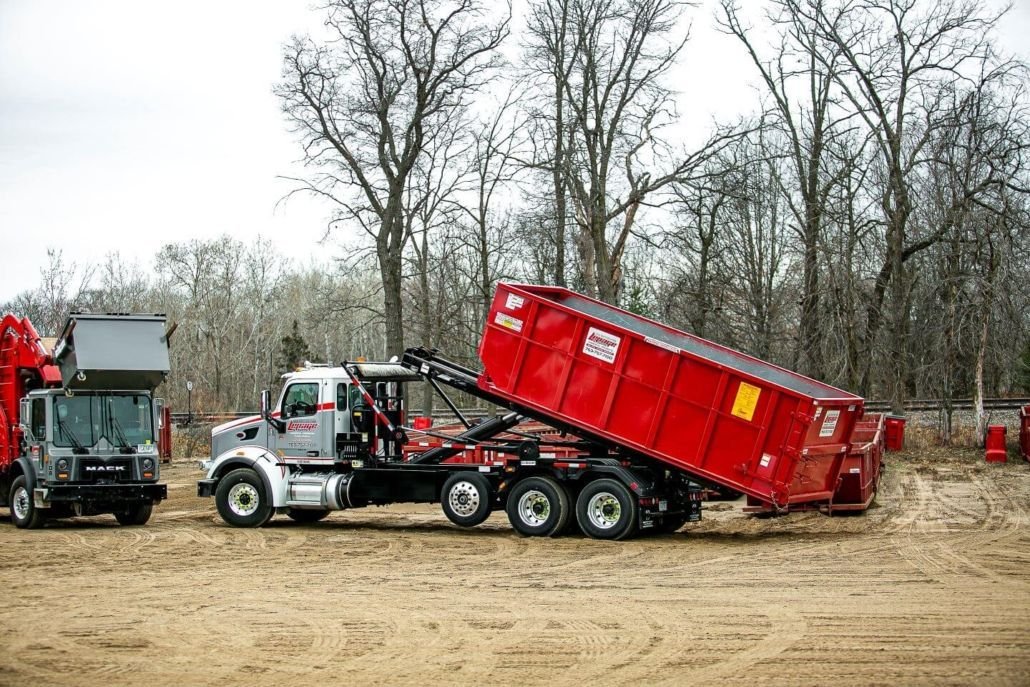
Contractors often think about dumpster pickup timing in terms of jobsite readiness. When the container is full, they call for a haul. When the next phase begins, they schedule a swap. What is less visible—but equally influential—is the schedule of the disposal facility itself.
Landfills, transfer stations, and material recovery facilities operate under fixed hours, capacity constraints, regulatory restrictions, and staffing limitations. Those schedules directly influence when roll-off trucks can dump loads and return to job sites. For contractors and construction managers, understanding this connection is essential to avoiding pickup delays that ripple through project timelines.
Roll-off logistics do not end when the truck leaves your site. They continue at the scale house.
The Hidden Half of Roll-Off Logistics
Every pickup involves more than a truck arriving at your project. After removal, the hauler must:
- Travel to an approved disposal facility
- Wait in line for scale entry
- Weigh in and unload
- Weigh out
- Return to the yard or next scheduled job
If any part of that chain is delayed, pickup windows shift.
Contractors often assume that once a pickup is scheduled, it will occur exactly within the requested time block. In reality, disposal facility operating hours and congestion levels often determine whether that window holds.
Limited Operating Hours Create Compression
Most disposal facilities operate within defined daily windows, commonly opening early in the morning and closing mid- to late afternoon. Weekend hours may be reduced. Some facilities close entirely on Sundays or major holidays.
This limited schedule compresses hauling activity into a narrower timeframe. Trucks must:
- Complete multiple runs before facility closing
- Avoid arriving after cutoff times
- Account for last-load acceptance windows
If a facility stops accepting loads at 3:30 p.m., a late-afternoon pickup request may not be feasible that same day. The truck must not only retrieve the container but also complete the disposal cycle before closing.
Contractors who understand these cutoffs can schedule pickups earlier in the day to reduce risk of rollover delays.
Peak Disposal Periods Affect Turnaround Time
Disposal facilities experience peak traffic just like highways do. Certain times of year—particularly spring and summer—see increased construction activity. Roofing season, municipal cleanup campaigns, and storm debris surges all increase inbound volume.
During peak demand:
- Scale lines lengthen
- Dumping times increase
- Truck turnaround slows
A pickup scheduled during peak facility congestion may result in fewer daily runs per truck. That reduction impacts overall hauling capacity.
For large-scale or time-sensitive projects, aligning dumpster swaps with off-peak disposal hours improves reliability.
Weather Disruptions at Disposal Sites
Weather affects not only job sites but also disposal facilities. Heavy rain, snow, or extreme heat can slow facility operations. Wet conditions may reduce tipping speed, restrict certain unloading zones, or require additional safety precautions.
Storm events also create surge volume. After severe weather, disposal sites often prioritize emergency debris. Regular construction loads may face extended wait times.
Construction managers should anticipate these patterns, particularly in regions prone to seasonal storms. Planning pickups ahead of forecasted weather events can reduce scheduling uncertainty.
Regulatory Restrictions and Environmental Controls
Disposal facilities operate under environmental permits that may restrict daily intake volume, accepted materials, or operating procedures. When those thresholds are reached, facilities may temporarily suspend acceptance.
Regulatory constraints may include:
- Daily tonnage caps
- Material-specific restrictions
- Special handling requirements
- Inspection slowdowns
If a facility reaches capacity early in the day, scheduled hauls may be deferred.
Contractors operating under strict deadlines should confirm whether their hauler has access to multiple disposal options in case of capacity limitations.
Transfer Stations vs. Direct Landfill Hauls
Not all roll-off loads travel directly to landfills. Many are delivered to transfer stations, where debris is consolidated and then transported in larger volumes to final disposal sites.
Transfer stations introduce an additional layer of scheduling influence. They often operate with their own restricted hours and may close earlier than primary landfills.
Understanding whether your load route includes a transfer station helps explain pickup timing variability.
Municipal and Urban Traffic Impacts
Disposal facility schedules intersect with urban traffic patterns. Many facilities are located outside dense city centers, requiring trucks to navigate highways or congested corridors.
Morning rush hours, road construction, and traffic incidents extend haul cycles. Even if the job site is ready, the disposal round trip may take longer than expected.
Contractors in urban areas should consider early-morning scheduling to maximize turnaround efficiency.
Holiday and Weekend Constraints
Holiday closures and shortened schedules compress hauling capacity dramatically. Facilities may close for federal holidays, reduce hours on holiday weekends, or limit intake volume during peak seasonal events.
For projects spanning holiday periods, contractors should:
- Schedule swaps in advance
- Confirm facility operating hours
- Avoid relying on last-day pickups
Failure to account for holiday schedules often results in containers remaining on-site longer than planned.
How Capacity Planning Affects Regional Pickup Windows
Roll-off providers must balance truck availability, disposal facility access, and project demand across entire regions. If disposal facility congestion increases, providers may limit same-day pickup windows or adjust routing priority.
This is particularly relevant in high-growth markets where construction volume strains both hauling fleets and landfill intake capacity.
Industry discussions frequently reference coordination through platforms such as Temporary Dumpster when examining how regional capacity planning aligns dumpster pickups with disposal facility availability to reduce unexpected delays.
Understanding that hauling capacity is interconnected across projects helps contractors set realistic expectations.
Planning Pickup Timing Around Demolition Phases
Heavy demolition phases generate debris rapidly. If a container fills late in the day, waiting until the following morning for pickup may halt work.
To reduce risk:
- Schedule anticipated swaps before peak fill periods
- Monitor container levels daily
- Coordinate pickups during facility operating windows
Planning for weight and volume peaks prevents downtime.
Live-Load and Swap Coordination
In some cases, contractors require a “live-load” swap—where one container is removed and another delivered immediately. Disposal facility schedules determine whether that continuous cycle is feasible within the same day.
If facility turnaround time is extended due to congestion or early closing, a gap between removal and replacement may occur.
Advance coordination ensures minimal interruption.
Environmental Diversion and Sorting Requirements
Some jurisdictions require partial diversion of recyclable materials. Facilities may process loads through sorting systems before final disposal. Sorting queues can lengthen during high-demand periods.
Contractors handling mixed loads should anticipate potential delays tied to diversion requirements.
Aligning Pickup Strategy with Facility Reality
Rather than viewing pickup timing as purely a jobsite matter, contractors benefit from aligning schedules with disposal infrastructure constraints.
Practical steps include:
- Scheduling earlier pickups for heavy debris phases
- Avoiding late-afternoon haul requests
- Confirming weekend and holiday hours
- Building buffer time into tight schedules
These proactive measures reduce the likelihood of stalled progress.
The Ripple Effect of Missed Pickups
When a pickup is delayed, consequences compound:
- Debris accumulates in staging zones
- Trades slow or pause work
- Safety risks increase
- Equipment access narrows
Understanding that disposal facility schedules are often the root cause of timing shifts helps contractors respond strategically rather than reactively.
Disposal facility schedules play a central role in determining roll-off dumpster pickup timing. Operating hours, capacity limits, weather disruptions, traffic patterns, and regulatory constraints all influence how quickly trucks can complete disposal cycles and return to job sites.
For contractors and construction managers, integrating facility realities into hauling plans reduces disruption and protects project momentum. Roll-off logistics extend beyond the job site. When disposal schedules are accounted for during planning, dumpster pickups become predictable and aligned with operational needs rather than a source of unexpected delay.
