

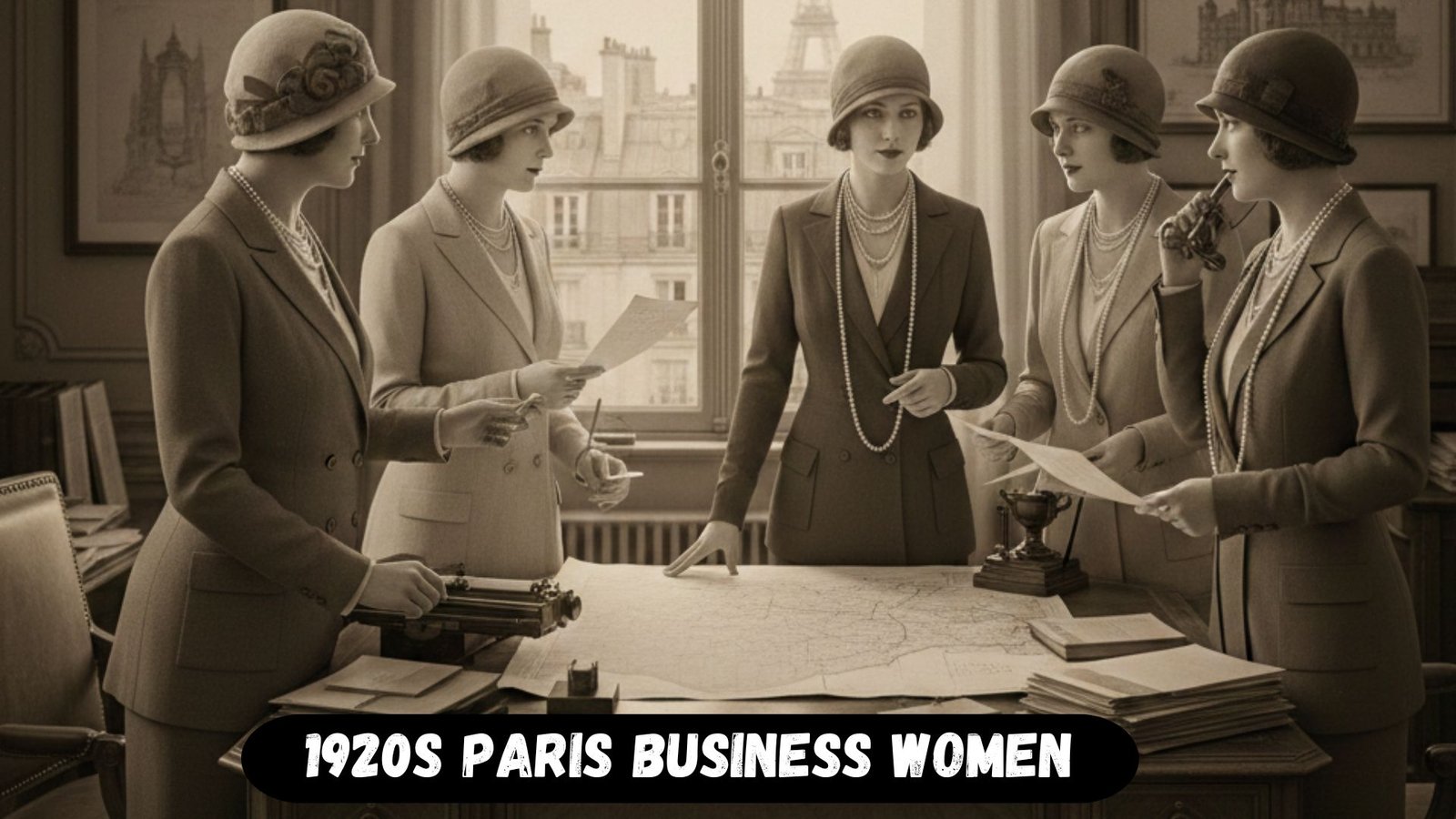
When people think of Paris in the 1920s, the images come fast. Jazz drifting through smoky cafés. Artists arguing late into the night. Hemlines rising. Rules falling apart.
But behind all that noise, something quieter — and honestly more impressive — was happening.
Women were building businesses.
Not loudly. Not always visibly. But steadily. In back rooms, salons, fashion houses, publishing offices, and cafés that doubled as meeting spaces. The story of 1920s Paris business women isn’t flashy in textbooks, but it’s deeply human. And long overdue.
Let’s slow down and look at it properly.
Paris After the War: Why the 1920s Changed Everything
World War I left Europe shaken. Millions of men were gone, industries were broken, and old social rules didn’t quite work anymore.
Paris, though… Paris adapted.
Women had already stepped into work during the war. Offices, factories, shops — they ran them because someone had to. When peace came, many didn’t want to step back. And some simply couldn’t.
So they stayed.
And not just as workers. As owners.
The city’s economy was messy but open. Rents were affordable. Ideas mattered more than pedigree. And that created space for women who were brave enough to claim it.
Who Were These Business Women, Really?
They weren’t one single “type.” That’s important.
Some came from wealthy families. Others arrived with one suitcase and a stubborn plan. Many were immigrants — American, Russian, Jewish, Armenian — drawn to Paris because it didn’t ask too many questions.
They were:
-
Fashion designers
-
Shop owners
-
Salon founders
-
Art dealers
-
Publishers
-
Café proprietors
-
Perfume entrepreneurs
-
Writers who turned words into income
And yes, sometimes they were all of those at once.
Fashion: The Most Visible Female-Led Industry
Fashion was the doorway. The obvious one.
Paris already ruled global style, and women understood women better than any male-run house ever could.
Take Coco Chanel — everyone knows the name. But she wasn’t alone. Not even close.
Women were opening:
-
Independent dressmaking studios
-
Hat (millinery) shops
-
Textile businesses
-
Boutique-style fashion houses
They focused on comfort, movement, and real life. Clothes you could work in. Walk in. Live in.
And customers noticed.
What Made Their Fashion Businesses Different?
-
Practical designs instead of heavy ornament
-
Neutral colors replacing excessive decoration
-
Clothes designed for working women
-
Faster production cycles
-
Personal relationships with clients
Fashion became business, not just art.
Salons, Cafés, and “Third Spaces”
Not all businesses looked like businesses.
Some were salons. Others were cafés. Many were both.
These spaces were often run by women who understood one thing very clearly — community creates money.
A café wasn’t just selling coffee. It was selling access. Conversation. Reputation.
Women used these spaces to:
-
Host artists and writers
-
Connect investors and creators
-
Promote books, art, and fashion
-
Create informal business networks
And yes, deals happened over wine and cigarettes. Quietly. Casually.
Publishing, Writing, and Intellectual Entrepreneurship
Paris in the 1920s was a writer’s city. And women weren’t just typing manuscripts — they were running the business side.
Some owned small publishing houses. Others managed literary magazines. Many turned personal writing into stable income.
They monetized:
-
Essays
-
Translations
-
Poetry
-
Memoirs
-
Journalism
And they controlled their work. That mattered.
Unlike traditional publishing structures elsewhere, Paris allowed more independence. Women negotiated contracts. Chose what to print. Took risks men wouldn’t.
The Challenges They Faced (And Yes, There Were Many)
Let’s not romanticize too much.
Being a woman in business was still hard. Often exhausting.
Some common obstacles included:
-
Limited access to formal credit
-
Male-dominated banking systems
-
Social judgment and gossip
-
Legal restrictions on contracts
-
Being taken less seriously in negotiations
And yet… businesses survived. Some even thrived.
Because these women adapted. They partnered. They reinvested profits. They learned by doing.
No business schools. No podcasts. Just instinct and resilience.
A Snapshot: Types of Businesses Women Ran
Here’s a simple table to make it clearer:
| Business Type | Common Industries | Why Women Succeeded |
|---|---|---|
| Fashion Houses | Clothing, Hats, Accessories | Direct understanding of women’s needs |
| Cafés & Salons | Food, Art, Networking | Community-building skills |
| Publishing | Books, Magazines | Editorial independence |
| Retail Shops | Perfume, Textiles, Decor | Personal customer relationships |
| Creative Services | Writing, Design | Flexible, skill-based income |
Simple. But powerful.
Why Paris Specifically?
You might ask — why Paris and not London or Berlin?
A few reasons:
-
Cultural openness to women’s independence
-
Strong consumer culture
-
International population
-
Less rigid class barriers
-
Creative industries valued over tradition
Paris didn’t guarantee success. But it gave permission to try.
That’s everything.
Their Legacy Still Lingers
Modern entrepreneurship loves to talk about “firsts.” First female CEO. First startup founder.
But the truth? Women were doing this a century ago.
The spirit of 1920s paris business women lives on in modern fashion houses, creative startups, women-led cafés, and independent publishing platforms.
They didn’t call themselves entrepreneurs.
They just needed to earn. To create. To live freely.
And somehow, they changed business culture along the way.
Small Stories Matter More Than Big Names
History remembers Chanel. But it forgets:
-
The dressmaker who employed six women
-
The café owner who introduced artists to patrons
-
The publisher who printed banned voices
-
The immigrant woman who built a shop from nothing
These unnamed women mattered just as much.
Maybe more.
Because they proved that business isn’t about permission. It’s about persistence.
Final Thoughts (Not a Conclusion… Just a Pause)
The 1920s weren’t perfect. Paris wasn’t paradise. And business women weren’t treated fairly.
But something shifted. Quietly.
Women stopped waiting.
They opened doors. Sometimes literal ones. Sometimes social ones. And once opened… they didn’t close easily.
That’s the real story. Not just of Paris. But of women in business everywhere.
And yeah — it started long before hashtags and headlines.
It started with courage, coffee, and a city that allowed a little rebellion.
