

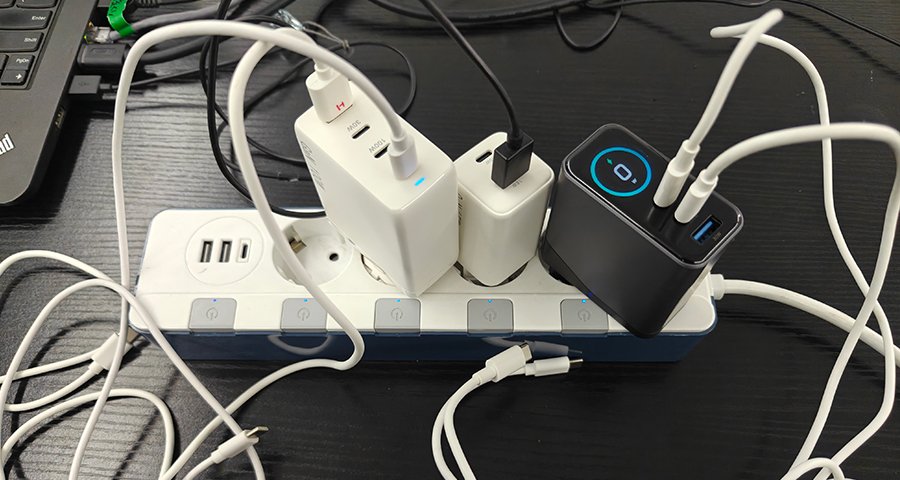
There was a time when most people only needed one charger and rarely thought much about it. You plugged your phone in at night, maybe carried a cable in your bag, and that was enough. Charging was simple because device use was simpler. People spent less time switching between work, entertainment, travel, and communication on the same screen, and they did not expect power access to follow them so closely throughout the day.
That has changed. Today, many people no longer rely on one charging solution because one solution no longer fits the way they actually use their devices. The modern charging routine is shaped by movement, convenience, speed, and context. What works on a bedside table may not work in a coffee shop. What feels ideal for a desk setup may not be the best option for commuting or travel. As digital habits have become more varied, charging choices have followed the same pattern.
Charging Needs Now Change Throughout the Day
The biggest reason people use more than one type of charger is simple: their needs are no longer the same from morning to night.
A person may start the day by checking messages in bed, continue with video calls and emails at a desk, use maps and mobile payment while out, and end the evening streaming content or scrolling social media. That is not one kind of device use. It is several different kinds packed into a single day. Each one places different demands on battery life and charging style.
At home, convenience may matter most. During work hours, reliable and faster charging may feel more important. On the move, portability becomes the deciding factor. This is why the idea of one charger doing everything has started to feel outdated. People are not necessarily buying more chargers because they want more accessories. They are choosing different chargers because their daily routines have become less fixed and more layered.
Convenience and Speed Serve Different Purposes
Another reason charging habits have diversified is that convenience and speed do not always come from the same product.
Some charging options are valued because they reduce friction. They are easy to place, easy to reach for, and easy to use while doing other things. That is part of the reason a Magsafe Charger has become popular in everyday settings such as bedside tables, kitchen counters, and minimalist desk setups. It fits a habit built around small, repeated moments of charging rather than one long session. For many users, the appeal is not only technical. It is behavioral. They like a setup that feels clean and effortless.
But convenience is not always the only priority. Sometimes people need efficient power delivery, wider compatibility, or a more direct charging connection for multiple devices. In those situations, people often start looking for the best usb c charger because the question is no longer about how tidy the setup looks. It is about how effectively the charger supports laptops, tablets, phones, and other devices in a faster-paced routine.
These are not competing priorities in every situation. In many cases, they simply belong to different moments.
The Rise of Multi-Device Living
Modern users are also carrying and using more devices than before. Even people who do not consider themselves especially tech-focused may move through the day with a phone, laptop, tablet, earbuds, smartwatch, or portable battery in regular rotation. That reality has made one-charger thinking less practical.
A single charger may still technically work for several devices, but technical compatibility is not the same as real-life convenience. A charger that feels perfect for a phone on a nightstand may feel underpowered or awkward in a work bag. A charger that handles a laptop well may feel unnecessary for casual evening use. As soon as people begin living across multiple screens, they also begin noticing that charging has different jobs to do.
This shift is especially clear in hybrid work and flexible travel routines. People move between home, office, transit, and public spaces more fluidly now. As a result, they increasingly build charging habits around place and purpose rather than around a single universal device.
Charging Has Become Part of Lifestyle Design
It is also worth noticing that chargers are no longer treated as invisible tools in the way they once were. They have become part of how people organize spaces and routines.
On a desk, some users want less cable clutter and a more polished look. Near the bed, they may want something easy to use without thinking. In a backpack, they may prefer something compact and dependable. The charger is no longer just about supplying power. It also affects how a space feels and how smoothly a routine works.
This is one reason charging choices now reflect personal habits more clearly. Some people prefer minimal setups with fewer visible accessories. Others care most about charging speed and device flexibility. Some want one option for static spaces and another for daily movement. The interesting shift is that consumers no longer assume one choice needs to satisfy every condition. Instead, they are more willing to match the charger to the setting.
Why One Charger Now Feels Like a Compromise
In practice, relying on only one type of charger often means accepting trade-offs all day long.
The charger may be convenient in one place but less useful in another. It may be fast enough for one device but not ideal for another. It may look clean at home but feel less practical on the move. That is why people are gradually building small charging ecosystems around themselves. Not large or complicated ones, just more intentional ones.
This does not mean every person needs a drawer full of accessories. It means the old expectation of one charger solving every problem no longer matches how digital life works. People want charging to support what they are doing in the moment, whether that means fast power during work, low-friction access at home, or a reliable option for travel and commuting.
Conclusion
People no longer use just one type of charger because their devices no longer serve just one role. Phones, tablets, and laptops now move through work, rest, travel, and everyday life without clear boundaries, and charging has had to adapt. Instead of asking one product to handle every situation, users are choosing solutions that fit different settings more naturally. In that sense, the shift is not really about having more chargers. It is about having charging that makes more sense for the way people live now.
